

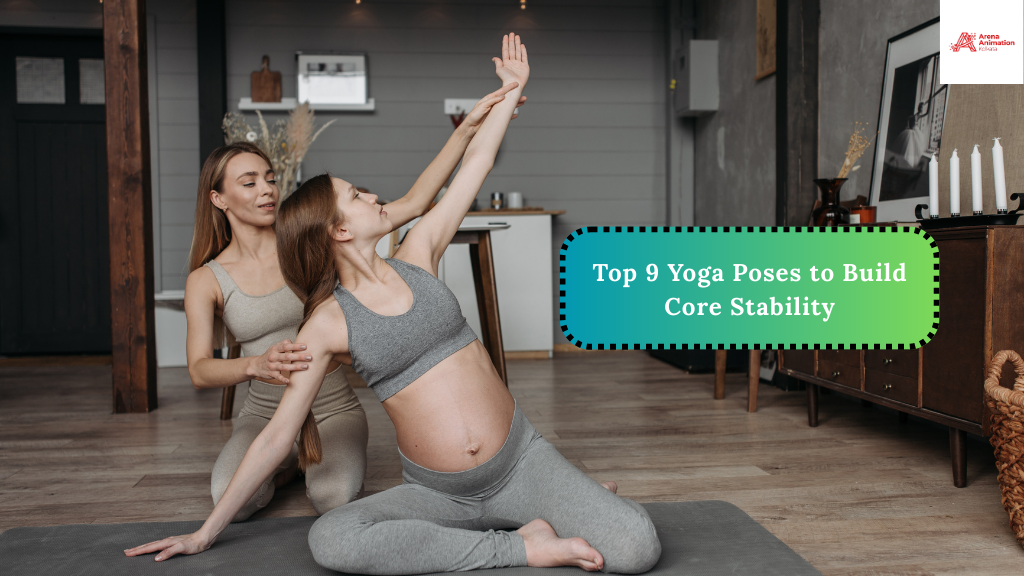
A strong and stable core is essential for good posture, balance, and overall body strength. The core muscles support the spine, improve movement efficiency, and reduce the risk of injuries during daily activities and workouts. Weak core muscles can lead to poor posture, back pain, and reduced stability. Yoga is one of the most effective and natural ways to strengthen the core while improving flexibility and body awareness.
In this article, we will explore the top 9 yoga poses to build core stability. These poses engage the abdominal muscles, lower back, hips, and pelvis, helping you develop strength, control, and balance. Suitable for beginners and intermediate practitioners, these yoga poses can be practiced at home and easily added to your regular fitness routine.
Why Core Stability Is Important
Core stability refers to the strength and control of the muscles around your abdomen, lower back, and pelvis. These muscles play a key role in almost every movement.
Benefits of Strong Core Stability
- Improves posture and spinal alignment
- Enhances balance and coordination
- Reduces risk of lower back pain
- Supports daily movements and sports performance
- Improves overall strength and endurance
Yoga helps strengthen the core in a balanced and mindful way.
How Often Should You Practice Yoga for Core Strength?
For best results:
- Practice core-focused yoga 4–5 times per week
- Hold each pose for 20–45 seconds
- Repeat poses 2–3 times
- Focus on steady breathing and proper alignment
Consistency is key to building long-term core stability.
Top 9 Yoga Poses to Build Core Stability
1. Plank Pose (Phalakasana)
Plank Pose is one of the most effective yoga poses for strengthening the entire core.
How to do it:
- Start in a push-up position
- Keep body in a straight line
- Engage core and hold
Benefits:
- Strengthens abs and back
- Improves posture
- Builds endurance
2. Boat Pose (Navasana)
Boat Pose deeply engages the abdominal muscles and improves balance.
How to do it:
- Sit and lift legs off the floor
- Keep spine straight
- Hold arms parallel to the ground
Benefits:
- Strengthens abdominal muscles
- Improves balance
- Enhances core control
3. Side Plank Pose (Vasisthasana)
Side Plank targets the oblique muscles and improves lateral stability.
How to do it:
- Shift weight onto one hand
- Stack feet or stagger them
- Lift hips and hold
Benefits:
- Strengthens obliques
- Improves shoulder stability
- Enhances balance
4. Warrior III Pose (Virabhadrasana III)
This balancing pose challenges the core while strengthening the legs.
How to do it:
- Balance on one leg
- Extend the other leg back
- Keep torso parallel to the floor
Benefits:
- Improves balance
- Strengthens core and legs
- Enhances body control
5. Forearm Plank Pose
Forearm Plank adds intensity while reducing wrist strain.
How to do it:
- Place forearms on the mat
- Keep body aligned
- Engage abs and glutes
Benefits:
- Builds deep core strength
- Improves endurance
- Protects wrists
6. Chair Pose with Twist (Parivrtta Utkatasana)
This pose combines strength and rotation for deeper core engagement.
How to do it:
- Sit into Chair Pose
- Twist torso to one side
- Keep chest lifted
Benefits:
- Strengthens abs and obliques
- Improves spinal mobility
- Enhances balance
7. Dolphin Pose
Dolphin Pose strengthens the core while improving shoulder stability.
How to do it:
- Lower forearms to the mat
- Lift hips upward
- Keep core engaged
Benefits:
- Builds core and shoulder strength
- Improves stability
- Enhances upper body control
8. Locust Pose (Salabhasana)
Locust Pose strengthens the back muscles, supporting core stability.
How to do it:
- Lie on your stomach
- Lift chest and legs
- Engage back and core
Benefits:
- Strengthens lower back
- Improves posture
- Supports spinal stability
9. Dead Bug Pose (Yoga Variation)
This pose focuses on controlled core engagement and coordination.
How to do it:
- Lie on your back
- Extend opposite arm and leg
- Keep lower back pressed to the mat
Benefits:
- Improves core control
- Enhances coordination
- Supports spinal health
Tips to Improve Core Stability with Yoga
- Focus on slow and controlled movements
- Engage core muscles in every pose
- Maintain proper alignment
- Avoid holding your breath
- Stay consistent with practice
Internal Linking Suggestions
For better SEO and user experience, link this article to:
- Best Yoga Poses for Strong Abs
- Beginner Yoga Routine for Full Body Strength
- Yoga for Better Balance and Stability
Conclusion
Practicing the top 9 yoga poses to build core stability is an effective way to strengthen your abdominal muscles, support your spine, and improve overall balance. These yoga poses engage both surface and deep core muscles, helping you build strength in a safe and sustainable way.
With regular practice and mindful breathing, yoga can help you develop a strong, stable core that supports better posture, movement, and long-term physical health. Even a short daily routine can lead to noticeable improvements in strength and stability over time.
READ ALSO: This is one of the best upper-body exercises to try if you sit at a desk all day