

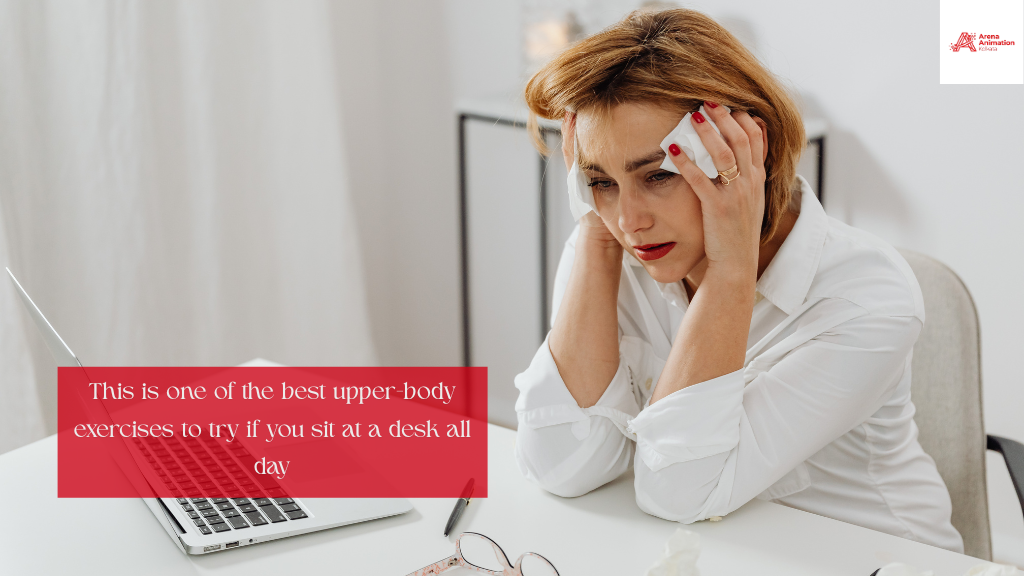
If you sit at a desk all day, you’re not alone. Millions of people spend hours working on laptops, attending online meetings, or scrolling on their phones. Over time, this lifestyle can lead to tight shoulders, rounded posture, neck stiffness, and upper-back discomfort.
The good news? You don’t need a gym, heavy weights, or a long workout to feel better. There is one simple upper-body exercise that can make a big difference if you sit for long hours—and it takes only a few minutes a day.
This article explains why desk work affects your upper body, what this best upper-body exercise is, how to do it safely, and how to add it into your daily routine.
Why Sitting All Day Is Hard on Your Upper Body
Sitting may seem harmless, but long periods at a desk can slowly change how your body feels and moves.
Common Upper-Body Problems From Desk Work
- Rounded shoulders
- Tight chest muscles
- Weak upper back
- Neck stiffness
- Poor posture
- Shoulder discomfort
When you sit and lean forward:
- Your chest muscles shorten
- Your upper-back muscles weaken
- Your shoulders roll inward
- Your neck carries extra tension
Over time, this imbalance can affect how you breathe, move, and even how confident you feel.
The One Upper-Body Exercise Desk Workers Should Try
The Exercise: Wall Angels
Wall Angels are one of the best upper-body exercises for people who sit at a desk all day. They help reverse the effects of poor posture and long sitting.
This exercise:
- Strengthens the upper back
- Opens the chest
- Improves shoulder mobility
- Encourages better posture
Best of all, it requires no equipment and can be done almost anywhere.
Why Wall Angels Work So Well
Wall Angels target the muscles that often get ignored during desk work.
Key Benefits
- Activates upper-back muscles
- Reduces shoulder tightness
- Improves posture awareness
- Supports neck comfort
- Helps with daily movement
Unlike fast or intense workouts, Wall Angels focus on control and alignment, which is exactly what desk workers need.
How to Do Wall Angels Correctly
Follow these steps carefully for best results.
Step-by-Step Instructions
- Stand with your back against a wall
- Feet a few inches away from the wall
- Head, upper back, and hips touching the wall
- Bend your arms to a 90-degree angle (goalpost shape)
- Keep elbows and wrists against the wall
- Slowly raise arms overhead
- Lower them back down with control
Breathing Tips
- Inhale as you lift your arms
- Exhale as you lower them
- Keep breathing slow and steady
Common Mistakes to Avoid
Many people rush this exercise or use poor form.
Avoid:
- Arching your lower back
- Forcing your arms too high
- Holding your breath
- Moving too fast
It’s okay if your arms don’t touch the wall at first. Progress matters more than perfection.
How Long Should You Do This Exercise?
You don’t need much time.
Recommended Routine
- 8–12 slow repetitions
- 1–2 sets
- Once or twice daily
Even two minutes can make a noticeable difference when done consistently.
Why Desk Workers Especially Benefit
If you sit all day, your body often stays in the same position for hours. Wall Angels help reset your posture and remind your body how proper alignment feels.
They are especially helpful for:
- Office workers
- Students
- Remote workers
- Drivers
- Anyone using a laptop or phone often
When Is the Best Time to Do Wall Angels?
You can do this exercise:
- During work breaks
- After long meetings
- In the morning to wake up the body
- In the evening to release tension
Many people like to do them right after work to undo the day’s posture.
What Happens If You Don’t Address Upper-Body Tension?
Ignoring posture issues can lead to:
- Long-term stiffness
- Reduced mobility
- Frequent discomfort
- Weaker muscles
Simple exercises like Wall Angels help prevent these issues before they become bigger problems.
How Wall Angels Support Better Posture
Posture isn’t about forcing yourself to “sit straight.” It’s about building strength where you need it.
Wall Angels:
- Strengthen postural muscles
- Improve body awareness
- Encourage natural alignment
Over time, good posture starts to feel more natural and less forced.
Can Beginners Do This Exercise?
Yes. Wall Angels are:
- Beginner-friendly
- Low impact
- Easy to modify
If you feel stiffness, go slow. Small movements are still effective.
Simple Modifications for Tight Shoulders
If Wall Angels feel difficult:
- Reduce your range of motion
- Bend elbows slightly more
- Take breaks between reps
Consistency matters more than depth.
Pair This Exercise With Small Daily Habits
For best results, combine Wall Angels with:
- Standing up every 30–60 minutes
- Adjusting screen height
- Relaxing shoulders away from ears
- Taking short movement breaks
Small changes add up.
How Long Until You Notice Results?
Many people feel:
- Less tightness after a few days
- Better posture awareness within a week
- Improved comfort with regular practice
The key is daily repetition, not intensity.
Why This Exercise Is Better Than Doing Nothing
You don’t need a full workout every day. Doing one good upper-body exercise is far better than staying completely still.
Wall Angels:
- Take little time
- Require no setup
- Fit into busy schedules
That’s why they work so well for desk workers.
Conclusion
If you sit at a desk all day, your upper body works hard just to hold you upright. Over time, that effort can lead to stiffness and poor posture. Wall Angels are one of the best upper-body exercises to help counter these effects.
They are simple, effective, and easy to do anywhere. Just a few minutes a day can help your shoulders feel more open, your posture feel more natural, and your upper body feel stronger.
You don’t need more time—you just need the right movement.
Frequently Asked Questions (FAQ)
Is this exercise safe to do daily?
Yes. Wall Angels are gentle and suitable for daily practice.
Do I need any equipment?
No equipment is needed.
Can this help with shoulder stiffness?
Yes. It helps improve shoulder mobility and upper-back strength.
How long does it take to do?
About 2–5 minutes.
READ ALSO: No Gym, No Equipment, Just 5 Minutes: The Core Workout That Actually Works