




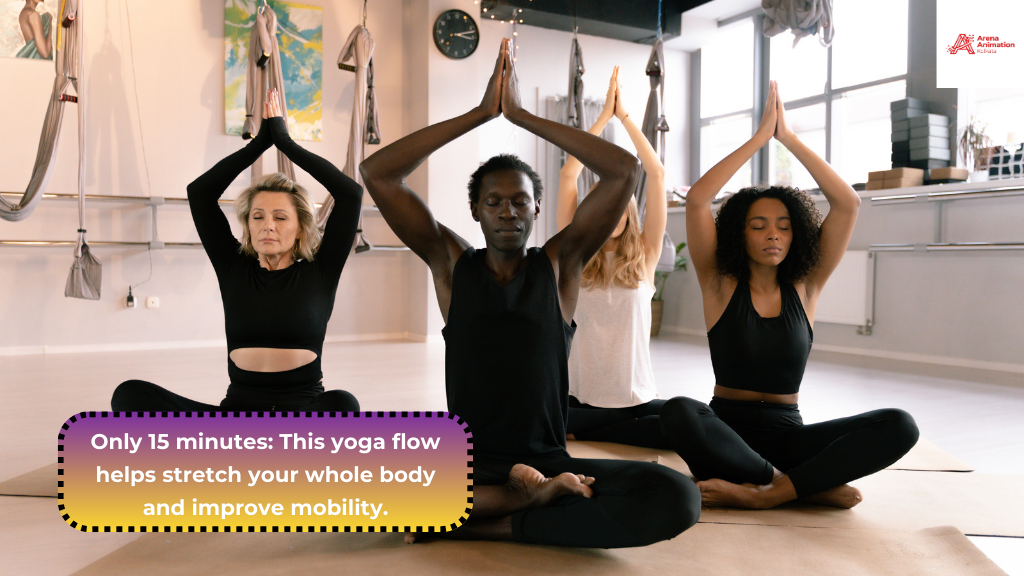
Modern life keeps many of us sitting for long hours—at school, at work, or on our phones. Over time, this can make the body feel stiff, tight, and low on energy. The good news is that you don’t need a long workout to feel better. A 15-minute yoga flow can stretch your whole body and improve your mobility in a gentle and safe way.
This simple yoga routine is suitable for beginners and all experience levels. It uses slow movements and breathing to help your body loosen up and move more freely. Many people feel lighter, calmer, and more comfortable after just one session.
In this article, you’ll learn:
- Why mobility matters
- How yoga helps the whole body
- A simple 15-minute full-body yoga flow
- Tips for safe practice
- How to build this into your routine
What Is Mobility and Why Is It Important?
Mobility means how well your joints and muscles move through their full range. Good mobility helps you:
- Move easily
- Maintain good posture
- Prevent stiffness
- Support healthy muscles and joints
- Feel comfortable in daily activities
When mobility is limited, simple movements like bending, reaching, or turning can feel tight or uncomfortable.
Yoga helps improve mobility by combining stretching, gentle strength, and mindful movement.
Why a 15-Minute Yoga Flow Works
You don’t always need long workouts. Short sessions can be very effective when done regularly.
A 15-minute yoga flow:
- Wakes up stiff muscles
- Improves circulation
- Encourages relaxation
- Supports flexibility
- Fits into a busy day
Consistency matters more than length. Doing 15 minutes often is better than doing 1 hour once in a while.
Who This Yoga Flow Is For
This flow is great for:
- Beginners
- Students
- Desk workers
- People who sit a lot
- Anyone feeling stiff
- People wanting gentle movement
No equipment is needed. A mat or soft surface is helpful but optional.
The 15-Minute Full-Body Yoga Flow
Move slowly and breathe deeply. Never force a stretch. Comfort is more important than depth.
1. Gentle Neck and Shoulder Rolls (2 minutes)
Start in a comfortable standing or seated position.
How to do it:
- Slowly roll shoulders backward and forward
- Gently tilt head side to side
- Move in a slow, relaxed way
Benefits:
- Releases neck tension
- Warms up upper body
- Improves circulation
2. Cat–Cow Stretch (2 minutes)
Come onto hands and knees.
How to do it:
- Inhale: lift chest and tailbone (Cow)
- Exhale: round spine (Cat)
- Move slowly with breath
Benefits:
- Improves spine mobility
- Warms up the back
- Relieves stiffness
3. Downward-Facing Dog (2 minutes)
From hands and knees, lift hips upward.
How to do it:
- Keep knees slightly bent if needed
- Press hands gently into the floor
- Relax your neck
Benefits:
- Stretches legs and back
- Opens shoulders
- Improves circulation
4. Low Lunge (2 minutes)
Step one foot forward into a lunge.
How to do it:
- Keep back knee down or lifted
- Stay tall in your chest
- Switch sides halfway
Benefits:
- Opens hips
- Stretches thighs
- Improves balance
5. Standing Forward Fold (2 minutes)
Stand and gently fold forward.
How to do it:
- Slight bend in knees
- Let arms hang naturally
- Relax your head
Benefits:
- Stretches hamstrings
- Releases back tension
- Calms the mind
6. Seated Twist (2 minutes)
Sit comfortably.
How to do it:
- Twist gently to one side
- Keep spine tall
- Switch sides
Benefits:
- Improves spinal mobility
- Aids relaxation
- Releases tension
7. Child’s Pose (3 minutes)
Finish in a resting pose.
How to do it:
- Knees down, hips back toward heels
- Arms forward or by your sides
- Breathe slowly
Benefits:
- Deep relaxation
- Gentle back stretch
- Calms the nervous system
Tips for a Safe and Effective Practice
- Move slowly
- Breathe deeply
- Stop if something feels painful
- Stay hydrated
- Wear comfortable clothes
Yoga should feel supportive, not stressful.
Best Time to Do This Yoga Flow
You can practice:
- In the morning to wake up
- After school or work
- In the evening to relax
- Before bed for calmness
Choose a time that fits your routine.
How Often Should You Practice?
For best results:
- 3–5 times per week is great
- Daily practice is even better
- Even twice a week helps
Regular movement keeps the body feeling good.
Common Mistakes to Avoid
- Rushing poses
- Holding your breath
- Forcing deep stretches
- Comparing yourself to others
Yoga is personal. Progress takes time.
How Long Until You Notice Results?
Some people feel:
- Immediate relaxation
- Less stiffness in a few days
- Better flexibility in a few weeks
Everyone is different. Stay patient and consistent.
Mental Benefits of Yoga
Yoga doesn’t just help the body. It also supports the mind.
Regular yoga can help:
- Reduce stress
- Improve focus
- Encourage calm breathing
- Support better sleep
Even short sessions can improve your mood.
Why Gentle Yoga Is Powerful
Gentle yoga may look simple, but it helps:
- Protect joints
- Build long-term flexibility
- Improve body awareness
- Prevent strain
Small daily movements add up over time.
Building a Healthy Habit
To make yoga a habit:
- Pick a regular time
- Keep sessions short
- Practice in a calm space
- Track your progress
A simple routine is easier to maintain.
Conclusion
You don’t need intense workouts or long sessions to feel better in your body. This 15-minute yoga flow can stretch your whole body, improve mobility, and help you relax.
Yoga is about caring for your body, not pushing it. When practiced regularly, even a short session can help you move more easily, sit more comfortably, and feel more relaxed.
Start small, stay consistent, and enjoy how your body feels.
FAQ
Is this yoga flow beginner-friendly?
Yes, it’s designed for beginners and can be adjusted to your comfort.
Do I need equipment?
No equipment is required. A mat is optional.
Can I do this every day?
Yes, gentle yoga is safe for daily practice.
What if I’m not flexible?
You don’t need to be flexible to start. Yoga helps you become more flexible over time.