




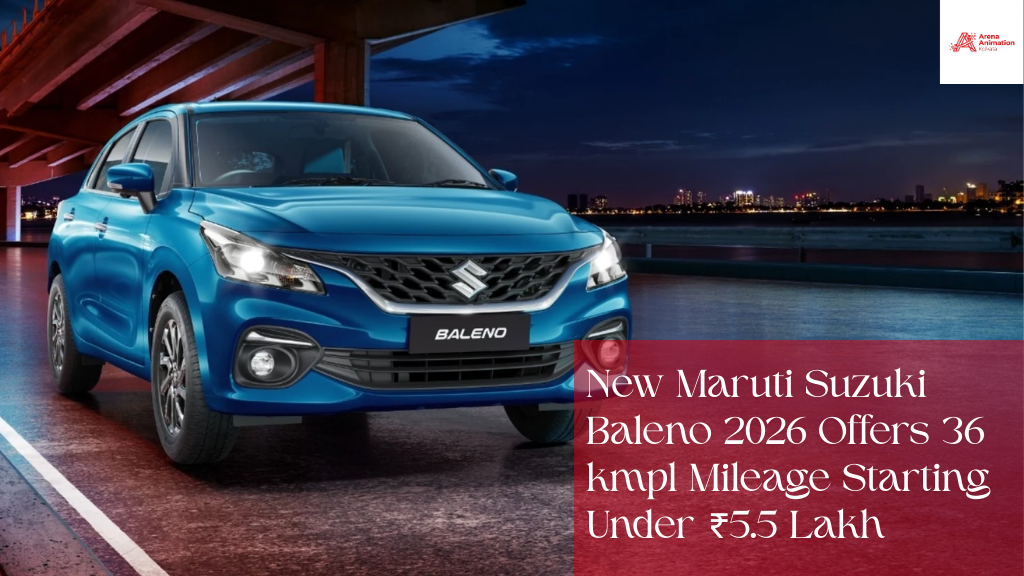
The automobile world is always changing. Every few years, carmakers introduce new models that redefine expectations. In 2026, Maruti Suzuki — one of India’s most trusted automobile brands — is expected to launch a new version of the Baleno. Rumored to deliver an incredible 36 km per liter mileage and priced under ₹5.5 Lakh, this new Baleno could become one of the most exciting cars in its segment.
But what does this mean for car buyers in India? Why is this launch important? And how could this change the way everyday people think about small cars? This article breaks all of that down in easy language — giving you a complete picture of the Baleno 2026 and why it matters.
1. A Brief Look at the Baleno Legacy
Before we dive into the 2026 version, let’s understand why Baleno matters.
The Baleno was first introduced in India years ago as a premium hatchback — a small car that feels and performs more like a mid-sized one. It quickly became popular for several reasons:
- Spacious interior compared to many hatchbacks
- Comfortable ride quality for both city and highway driving
- Efficient engines that deliver great fuel economy
- Maruti Suzuki’s reliable after-sales service network
Over time, Baleno gained a loyal fan base — especially among those who wanted more features without paying too much. It became known as a smart choice for young buyers, small families, and daily commuters.
So when news spread that a new 2026 Baleno might be coming with a 36 km/l mileage figure and a price below ₹5.5 Lakh, expectations soared.
2. What Is So Special About 36 km per Liter?
To understand why 36 km per liter is big news, we need context.
In India, fuel prices often rise. Petrol (gasoline) and diesel can take up a large portion of a family’s monthly expenses. So when a car promises high fuel efficiency, it catches immediate attention.
Most hatchbacks today offer mileage figures around 17–24 km per liter depending on conditions. Even efficient ones typically stay below 30 km/l. So 36 km/l — nearly double what many people get in real life — is noteworthy.
Here’s why it matters:
a. Lower Fuel Costs
If you drive 1,000 km in a month and your car returns 36 km/l:
- You use ~28 liters of fuel
- At ₹100 per liter, that’s ₹2,800
Now compare that to a car doing 20 km/l:
- You use ~50 liters
- At ₹100 per liter, that’s ₹5,000
Savings per month = ₹2,200
Over a year, that’s nearly ₹26,400 saved just on fuel. For many families, that’s a meaningful amount.
b. Better for the Environment
Higher fuel economy means fewer emissions for the same distance. This helps reduce pollution and supports sustainability — something both governments and buyers appreciate.
c. Less Frequent Fuel Stops
For people who drive long distances — like office commuters, delivery drivers, or travelers — fewer trips to fuel stations means more convenience and time saved.
So when Baleno 2026 promises 36 km/l, it isn’t just a number — it signals real financial and practical benefits.
3. Expected Price Tag: Under ₹5.5 Lakh
Along with the mileage figure, the expected price of under ₹5.5 Lakh is equally exciting.
In India, hatchbacks under ₹6 Lakh are among the most popular vehicles. They appeal to first-time car buyers, small families, and anyone who wants reliable transport without spending too much.
Here’s what a price under ₹5.5 Lakh could mean:
a. Incredible Value for Money
If Baleno 2026 delivers modern features, great mileage, and a comfortable cabin while staying under ₹5.5 Lakh, it could become one of the best value cars in its class.
b. Competition With Rivals
Several hatchbacks and compact cars compete in this price range. A strong Baleno presence here could push other manufacturers to offer more features, better mileage, and sharper pricing — all good news for buyers.
c. Boost to First-Time Buyers
Many young professionals look for reliable cars without loans that dig deep into their monthly budget. A Baleno under ₹5.5 Lakh can make car ownership more accessible.
All of this shows that price and mileage together could make the 2026 Baleno a game changer.
4. What to Expect in Design and Features
While mileage and price are important, buyers also care about how the car looks and feels. So what might the Baleno 2026 offer?
Since this article is based on reasoning and expectations (not leaked information), here’s a likely picture of the car:
a. Fresh Exterior Design
Baleno’s design has always leaned toward elegance rather than aggression. For 2026, imagine:
- Sleek LED headlights
- A sharper front grille
- Aerodynamic lines for better airflow (which also helps fuel efficiency)
- Stylish alloy wheels
Overall, the car would likely look modern and sporty without being too flashy — perfect for both young buyers and families.
b. Comfortable Interior
Maruti Suzuki focuses on practicality. So imagine:
- Spacious seating for five adults
- Soft fabric upholstery
- Adjustable seats for driver comfort
- Ample legroom and headroom
Hatchbacks don’t always excel in space, but Baleno has always been above average — likely continuing this trend.
c. Feature-Rich Dashboard
Buyers today expect technology even in budget cars. The Baleno 2026 might include:
- A touchscreen infotainment system with smartphone connectivity (Apple CarPlay / Android Auto)
- Bluetooth and USB support
- Steering-mounted audio controls
- Voice commands
- Digital instrument cluster or semi-digital display
These features make daily driving enjoyable and convenient.
d. Safety First
Safety is non-negotiable. So the 2026 Baleno should offer:
- Dual airbags (driver and passenger)
- Anti-lock Braking System (ABS) with EBD (Electronic Brakeforce Distribution)
- Rear parking sensors or camera
- ISOFIX child seat anchors
Safety features add confidence and protect both drivers and passengers.
5. The Engine and Mileage Breakdown
Fuel economy is closely tied to the engine and how the car is designed.
So how might Baleno 2026 achieve 36 km/l?
Here’s a simple overview of factors that help:
a. Efficient Engine Technology
Maruti Suzuki has a history of refining small petrol engines for fuel efficiency. For 2026, the Baleno might use:
- A small displacement petrol engine (likely around 1.2 liters or less)
- A lightweight design to reduce energy use
- Smart fuel injection systems
These technologies help burn fuel more cleanly and efficiently.
b. Low Rolling Resistance
Tyres and suspension affect how much energy the car needs to move. If the car rolls more easily, the engine doesn’t have to work as hard — boosting mileage.
Maruti might use tyres and chassis designs to reduce resistance and improve balance.
c. Aerodynamics
The shape of the car matters. Smooth airflow around the vehicle reduces drag, improving mileage especially at highway speeds.
The 2026 Baleno’s body could be designed with airflow-friendly curves that cut wind resistance efficiently.
d. Optional Smart Technology
Some modern cars use intelligent systems like:
- Start-stop technology (engine auto off at traffic signals)
- Energy regeneration systems
If the Baleno 2026 includes smart fuel-saving tech, that could help it reach the 36 km/l figure in real-world conditions.
6. Who Is This Car For?
A key question before buying any car is: Who is it perfect for?
The Baleno 2026 — with 36 km/l mileage and price under ₹5.5 Lakh — is likely ideal for:
a. Daily Commuters
People who drive long distances to work every day will notice the fuel savings instantly.
b. First-Time Car Buyers
Affordable price and smart features make it a great choice for young buyers and recent graduates.
c. Small Families
Spacious interiors and safety features suit daily school runs, shopping trips, and weekend outings.
d. Budget-Conscious Drivers
If someone wants reliable transportation with low running costs, this Baleno could be perfect.
e. Urban and Highway Drivers
A balance of comfort and mileage makes it versatile — suitable for both city traffic and highway travel.
Overall, the car fits a wide range of buyers — especially those who value comfort, efficiency, and affordability.
7. Why People Are Excited About This Launch
Let’s summarize the reasons people are looking forward to the Baleno 2026:
1. Excellent Mileage
36 km/l is a standout figure that could save money every month.
2. Affordable Price
A price under ₹5.5 Lakh makes it competitive and accessible to many buyers.
3. Trusted Brand
Maruti Suzuki has long been known for reliability and strong service support across India.
4. Features for Daily Life
Modern design, technology, and safety features make the car enjoyable and practical.
5. Strong Resale Value
Maruti cars often hold value well — meaning owners can sell or upgrade more easily later.
6. Lower Maintenance
Simpler and efficient engines often cost less to maintain — another plus for budget buyers.
All these factors lead to strong interest and positive anticipation for this launch.
8. Possible Challenges and Realistic Expectations
Even the most exciting cars have limitations. Here are some things to keep in mind:
a. Real-World Mileage May Vary
The 36 km/l figure is likely achieved under ideal test conditions. In daily use with traffic, AC, heavy loads, and city driving, real mileage might be lower — though still efficient.
b. Feature Balance at Low Price
Keeping price under ₹5.5 Lakh means some features might be basic compared to higher-end cars. Buyers should choose trims based on priority — whether comfort or price.
c. Competition Is Tough
Other brands also offer efficient and affordable hatchbacks. While Baleno’s strengths are notable, buyers should compare before deciding.
d. Waiting Time
New launches often lead to long waiting periods. If demand outpaces supply, buyers might wait weeks or months.
Despite these realities, the overall package still looks promising — especially for buyers who value fuel economy and affordability.
9. What Buyers Should Do Before Booking
If you are considering the Baleno 2026, here are steps to take before booking:
1. Research Variants
Different trims may offer various features — choose based on priority (safety, tech, comfort).
2. Take a Test Drive
Nothing replaces real experience. Test driving helps you feel performance and comfort.
3. Compare With Rivals
Look at rival hatchbacks in the same price range to ensure you’re making the best choice.
4. Check Financing Options
See loan plans and EMI options to pick what fits your budget.
5. Consider Long-Term Costs
Fuel, maintenance, insurance, and service network — all these affect overall ownership cost.
By preparing carefully, buyers can make a confident decision.
10. Final Thoughts
The Maruti Suzuki Baleno 2026 — expected to deliver 36 km per liter and cost under ₹5.5 Lakh — represents a powerful combination of efficiency, affordability, and practicality. For many Indian buyers, it could become a smart choice for daily commuting, family use, and long-term savings.
With a trusted brand, modern design, smart features, and strong fuel economy, this Baleno could set new standards in its segment. While real-world results may vary, the direction is clear: better mileage, lower running cost, and strong value for money.
If you are planning to buy a new car soon, this launch might be worth watching closely — because it promises to change the expectations from what an affordable hatchback can deliver.