

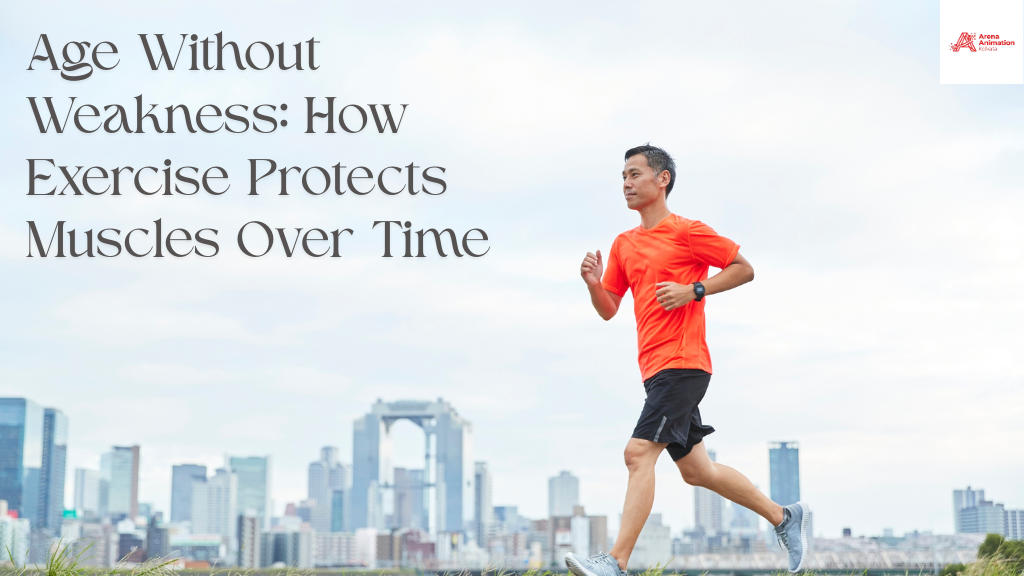
Aging is a natural part of life, but muscle weakening does not have to be accepted as unavoidable. While it is true that the body changes over time, research and real-life experience consistently show that regular exercise is one of the most powerful tools for protecting muscle strength, mobility, and independence as we grow older.
We believe that the human body is designed to move throughout life. When movement slows down or stops, muscles weaken faster. When movement continues—done safely, consistently, and with intention—the body responds by staying stronger, more stable, and more capable. This article explains why muscles weaken with age, how exercise directly fights this process, and what types of movement are most effective for long-term muscle health.
Understanding Age-Related Muscle Weakening
Muscle weakening linked to aging is a gradual process. It does not suddenly appear, but develops slowly over many years, often without being noticed at first.
What Happens Inside the Body
As we age:
- Muscle fibers slowly shrink
- The body builds new muscle tissue less efficiently
- Nerve signals that activate muscles become weaker
- Physical activity levels often decline
This combination leads to reduced strength, slower movement, and less endurance. Everyday actions like standing up, lifting objects, or walking long distances may begin to feel harder.
Why Muscle Weakening Matters
Muscles are essential for far more than movement. They support:
- Joint stability
- Bone strength
- Balance and coordination
- Blood sugar control
- Posture and breathing
When muscles weaken, the risk of falls, injuries, and loss of independence increases. This is why protecting muscle health is one of the most important goals of healthy aging.
Why Exercise Is the Most Effective Solution
Exercise is not just about fitness—it is a biological signal. When muscles are used, the body understands that they are still needed and responds by maintaining and strengthening them.
How Muscles Respond to Movement
When we exercise:
- Muscle fibers are activated and repaired
- Blood flow to muscles improves
- Nerve-to-muscle communication becomes stronger
- Muscle protein production increases
This response happens at any age. Even later in life, muscles can grow stronger when they are used regularly.
Inactivity Accelerates Muscle Loss
Without exercise:
- Muscles shrink faster
- Strength declines more rapidly
- Balance worsens
- Movement becomes less efficient
Exercise slows down this process and can even reverse part of it.
The Difference Between Aging and Inactivity
Many people believe muscle weakness is caused only by aging. In reality, inactivity plays a much larger role.
Active Aging vs. Sedentary Aging
People who stay active tend to:
- Maintain muscle strength longer
- Move with more confidence
- Recover faster from illness or injury
- Remain independent for more years
This shows that how we age depends greatly on how we move.
How Exercise Preserves Muscle Strength
Exercise protects muscles in several important ways.
Maintaining Muscle Size
Strength-based movements slow down the loss of muscle fibers. Even light resistance, such as bodyweight exercise, can help preserve muscle mass.
Improving Muscle Quality
Exercise improves how muscles work, not just how big they are. This includes:
- Better coordination
- Faster response times
- Improved endurance
This makes daily activities easier and safer.
Enhancing Muscle Recovery
Active muscles recover faster after effort. This reduces fatigue and allows for more consistent movement.
Types of Exercise That Fight Muscle Weakening
Not all exercise works the same way. A balanced approach is most effective for aging muscles.
1. Strength-Based Exercise
Strength exercises are the most direct way to fight muscle weakening.
Why Strength Training Matters
Strength-based movement:
- Stimulates muscle fibers
- Maintains power and control
- Supports joint health
This does not require heavy weights. Bodyweight movements can be highly effective.
Examples of Strength Movements
- Squatting to sit and stand
- Wall push-ups
- Step-backs and controlled lunges
- Carrying light objects
These movements mimic daily activities, making them functional and safe.
2. Balance and Stability Training
Balance declines as muscles weaken, especially in the legs and core.
How Balance Exercise Helps
Balance training:
- Activates stabilizing muscles
- Improves coordination
- Strengthens ankles, hips, and core
Simple Balance Exercises
- Standing on one leg with support
- Heel-to-toe walking
- Slow weight shifts
These exercises help prevent falls and build confidence in movement.
3. Core Strengthening
The core supports every movement the body makes.
Why the Core Is Essential
A strong core:
- Protects the spine
- Improves posture
- Reduces back pain
- Enhances balance
Core-Friendly Exercises
- Standing abdominal engagement
- Seated core tightening
- Wall-supported plank positions
These movements build deep strength without stressing the back.
4. Upper-Body Strength Exercises
Upper-body muscle loss affects daily tasks more than many people realize.
Why Upper-Body Strength Is Important
Strong arms and shoulders support:
- Lifting and carrying
- Reaching overhead
- Pushing and pulling
Safe Upper-Body Movements
- Wall push-ups
- Arm raises
- Controlled reaching patterns
These movements help maintain independence and reduce strain.
5. Mobility and Flexibility Work
Muscles weaken faster when joints become stiff.
How Mobility Supports Strength
Mobility exercises:
- Allow muscles to move fully
- Reduce joint stiffness
- Improve circulation
Gentle Mobility Exercises
- Arm circles
- Spine rotations
- Hip and ankle movements
These exercises keep muscles active and responsive.
How Exercise Improves Nerve-Muscle Connection
Muscle strength depends not only on muscle size but also on how well nerves communicate with muscles.
Improved Coordination
Exercise trains the nervous system to activate muscles more efficiently, leading to smoother movement.
Faster Reaction Time
Regular movement improves how quickly muscles respond, which is essential for balance and fall prevention.
Exercise and Bone-Muscle Connection
Muscles and bones work together.
Why This Connection Matters
When muscles pull on bones during exercise:
- Bone strength is supported
- Joint alignment improves
- Fracture risk may decrease
This makes exercise a powerful tool for overall structural health.
Mental and Emotional Benefits of Exercise
The benefits of exercise are not only physical.
Confidence and Independence
Stronger muscles lead to:
- Less fear of falling
- Greater confidence in daily activities
- A stronger sense of independence
Exercise and Mental Well-Being
Regular movement:
- Improves mood
- Reduces stress
- Enhances mental clarity
This makes it easier to stay consistent with exercise over time.
How Often Should Exercise Be Done to Protect Muscles
Consistency is more important than intensity.
Recommended Frequency
- 3–5 days per week
- 20–40 minutes per session
- Full-body focus
Short, regular sessions are often more effective than long, infrequent workouts.
Progressing Safely
Exercise should:
- Feel challenging but manageable
- Improve gradually over time
- Never cause sharp pain
Listening to the body is essential.
Common Misunderstandings About Exercise and Aging
Myth 1: It’s Too Late to Start
Muscles respond to exercise at any age. Improvement is always possible.
Myth 2: Exercise Must Be Intense
Gentle, controlled movement can still be very effective.
Myth 3: Rest Is Better Than Movement
Too much rest accelerates muscle weakening. Balanced movement supports recovery.
Long-Term Impact of Regular Exercise
With consistent exercise, people often experience:
- Better posture
- Improved walking speed
- Stronger joints
- Reduced injury risk
- Greater independence
These benefits grow over time and improve overall quality of life.
Exercise as a Lifelong Practice
Exercise should not be seen as a short-term solution. It is a lifelong practice that adapts to the body’s needs at every stage of life.
By focusing on:
- Strength
- Balance
- Mobility
- Consistency
Muscle weakening can be slowed, managed, and often reversed.
Conclusion: Movement Is the Key to Strong Aging
Muscle weakening with age is common, but it is not inevitable. Exercise is the most effective and natural way to protect muscle strength, support mobility, and preserve independence. The body responds to movement at every age, proving that strength is not reserved for the young.
We believe that staying active is not about pushing limits, but about honoring the body’s need to move. Through regular, thoughtful exercise, muscles remain strong, coordination stays sharp, and life remains active and fulfilling. Aging changes the body, but movement ensures it remains capable, resilient, and strong for years to come.