
A Comprehensive Look at India’s Electric Vehicle Revolution
India’s electric vehicle (EV) industry is rapidly transforming from a niche sector into one of the most significant growth stories in the global automotive market. In the financial year 2024‑25 (FY25), India crossed a major milestone by selling over one million electric vehicles, a testament to the accelerating adoption of electrified mobility across the country. This achievement not only reflects the success of government policies and industry innovation but also signals India’s increasing role as a leader in sustainable transportation globally.
In this article, we explore the current landscape of the EV market in India, the factors driving this rapid growth, segments leading in adoption, government initiatives, industry participation, infrastructure expansion, consumer behavior, challenges ahead, and the long‑term outlook for one of the fastest‑growing EV markets in the world.
1. The EV Revolution in India: A Milestone Year
1.1 FY25 — A Breakthrough Year
The financial year 2024‑25 marked a historic point for India’s EV sector. Official data indicates that total EV sales surpassed one million units across categories, led primarily by electric two‑ and three‑wheelers — segments that dominate the Indian EV landscape.
This achievement highlights not only the rising popularity of electric vehicles but also the growing confidence of consumers and businesses in electric mobility as a viable alternative to traditional petrol and diesel vehicles. The milestone was underscored by key policymakers in the Indian government, noting that this growth places India among the world’s fastest‑growing EV markets.
1.2 How This Compares Regionally
Globally, electric vehicle adoption has been on the rise, but many established markets such as the United States and Europe have faced slower growth in recent years due to subsidy reductions and supply constraints. In contrast, India’s EV market continued its steady upward trajectory, driven by strong policy support and expanding consumer interest.
2. Segmental Growth: Two‑Wheelers, Three‑Wheelers and Passenger Vehicles
The overall EV market in India is composed of several distinct segments, each showing different growth patterns and challenges.
2.1 Electric Two‑Wheelers: The Dominant Force
Electric two‑wheelers (e‑2Ws) continue to lead the EV market in India. These vehicles are particularly suited to India’s mobility needs, offering affordable prices, low operational costs, and ease of use in traffic‑congested urban centers.
In FY25, electric two‑wheeler sales crossed more than 1.14 million units, growing significantly compared to the previous year as consumers increasingly shifted from conventional petrol scooters and motorcycles to electric variants.
This growth was supported by a wide range of models from domestic and international companies — including Ola Electric, TVS Motors, Bajaj, Ather Energy and others — offering improved battery performance, design variety, and competitive pricing.
Beyond volume, the rapid urbanization of India’s cities and rising youth awareness about sustainability have played a key role in the increasing adoption of electric two‑wheelers, often seen as the gateway for everyday electric mobility.
2.2 Electric Three‑Wheelers: Commercial Mobility Electrified
Electric three‑wheelers (e‑3Ws) — which include both passenger and cargo variants — are another major contributor to India’s EV story.
India is widely recognized as the largest market in the world for electric three‑wheelers, with sales continuing to expand even when global three‑wheeler markets are contract.
These vehicles are integral to public transport and last‑mile delivery services in towns and cities across the country. The growth in this segment is driven by cost advantages (electric three‑wheelers are cheaper to operate than diesel variants), improved earning potentials for drivers/operators, and government incentives for electrified commercial mobility.
2.3 Electric Passenger Vehicles: Rapidly Emerging Segment
Although electric passenger cars and SUVs still make up a smaller share of total EV sales compared to two‑ and three‑wheelers, this segment is growing at a steady and notable pace.
In FY25 alone, electric passenger vehicle sales — including cars, SUVs and MPVs — achieved record highs with over 107,000 units sold, representing year‑on‑year growth.
Major manufacturers like Tata Motors and JSW MG Motor are leading this segment, with strong sales of models like the Tata Nexon EV and MG Windsor. These vehicles appeal to consumers seeking eco‑friendly alternatives without sacrificing performance, design, or comfort.
3. Government Policies and Initiatives Driving Growth
The rapid expansion of the EV market in India is deeply rooted in proactive governmental support — both at the national and state levels.
3.1 National Policy Framework
India’s government has introduced a range of policies designed to accelerate EV adoption, reduce dependency on imported fossil fuels, and promote domestic manufacturing. Key among these are:
- FAME India Scheme (Faster Adoption and Manufacturing of Electric Vehicles): A flagship program offering subsidies for EV buyers and battery manufacturers to lower upfront costs and stimulate demand.
- PM E‑DRIVE Scheme: Launched in 2024, this scheme focuses on supporting electric two‑ and three‑wheelers by offering budgetary incentives and access to financing, leading to significant sales growth in FY25.
- Production Linked Incentive (PLI) Schemes: These offer financial benefits to manufacturers that localize EV and battery production in India, encouraging investment and technological development.
Together, these policies create an ecosystem that supports both supply and demand — from manufacturers building EVs and batteries in India to consumers choosing greener vehicles.
3.2 State Government Support
Beyond national schemes, Indian states have implemented their own EV policies to attract investment and boost adoption. Incentives may include reduced registration fees, tax exemptions, and support for EV infrastructure development.
States like Uttar Pradesh, Maharashtra, Karnataka, Tamil Nadu and Bihar have emerged as leaders in EV adoption due to their proactive policy environments and strategic investments. This has helped diversify the geographic spread of EV sales beyond the major metropolitan centers.
4. Infrastructure Expansion and Charging Networks
One of the key challenges for EV adoption globally is charging infrastructure — and India is making substantial strides in this area.
4.1 Rapid Growth in Charging Stations
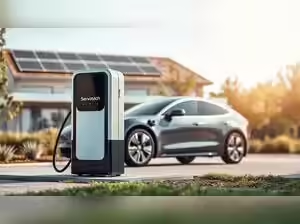
India’s public EV charging network has grown rapidly over recent years, increasing nearly fivefold between FY22 and early 2025. As of mid‑2025, there were over 26,000 public chargers across the country, expanding both urban and intercity charging options.
These charging stations include a mix of slow chargers, fast chargers and ultra‑fast chargers, offering flexibility to EV owners based on their needs and usage patterns. A robust charging network is essential to reduce “range anxiety” — a common concern among potential EV buyers worried about running out of battery power before reaching a charging point.
India’s focus on charging infrastructure is reinforced by ambitious targets to install over 1.3 million charging stations by 2030, requiring tens of thousands of installations annually. These efforts aim to support electrification of both private and commercial fleets.
4.2 Private Sector Involvement
The expansion of charging infrastructure involves both government and private participants. Energy companies, automobile manufacturers, startups and technology firms are investing in charging networks — including battery swapping stations and next‑generation fast chargers.
For example, partnerships between traditional fuel providers and EV charging firms aim to retrofit petrol stations with EV chargers, blending conventional fuel retailing with electric mobility infrastructure.
5. Economic Impact and Industry Response
India’s EV market growth has significant implications for the nation’s economy, employment, manufacturing landscape, and global automotive competitiveness.
5.1 Boost to Domestic Manufacturing
Government incentives like the PLI schemes have encouraged global and domestic manufacturers to invest heavily in EV production in India.
Major players such as Tata Motors, MG Motor, Mahindra & Mahindra, Hyundai, and several two‑wheeler brands are expanding production capacities to meet growing demand. Increased production helps India reduce reliance on imports of EVs and key components, while also enhancing exports — contributing to the broader “Make in India” vision.
5.2 Economic Growth and Jobs
The EV ecosystem supports a wide range of industries — from vehicle assembly and battery manufacturing to charging infrastructure, software systems, and after‑sales services. As this ecosystem grows, it stimulates job creation across manufacturing, supply chain logistics, R&D, and operations.
In states receiving large EV investments, thousands of jobs are expected to be created in factory operations, component manufacturing, and related support industries.
5.3 Export Potential
India’s growing EV manufacturing capabilities position it as a potential export hub for electric vehicles and parts — particularly for emerging markets in Africa, Southeast Asia, and Latin America. Export growth would diversify India’s automobile sector and strengthen its international trade footprint.
6. Consumer Perspectives and Market Dynamics
India’s consumer market for EVs is evolving quickly, shaped by changing preferences, economic incentives, and broader awareness of environmental issues.
6.1 Affordability and Cost Considerations
One of the major factors influencing EV adoption is cost. While EVs generally have a higher upfront price compared to internal combustion engine (ICE) vehicles, they offer lower running and maintenance costs over time due to cheaper electricity and fewer moving parts.
Government subsidies and financing options have helped reduce upfront costs for buyers, especially in the electric two‑wheeler segment, making EVs more accessible to first‑time buyers and everyday commuters.
6.2 Increased Model Availability
A growing range of EV models — from affordable electric scooters and bikes to premium electric SUVs — means consumers have more choices than ever before. Competition among automakers has led to better features, improved performance, and broader price points, helping attract a wider pool of buyers.
6.3 Consumer Confidence and Awareness
Consumer confidence in EV technology is gradually increasing as the familiarity with battery performance, durability and charging infrastructure improves. Government advertising campaigns, media coverage and positive user experiences are also raising awareness about the environmental advantages of EVs, including reduced emissions and cleaner air in cities.
7. Challenges and Barriers to Growth
Despite the strong growth trajectory, India’s EV market still faces significant challenges that must be addressed to sustain and accelerate progress.
7.1 Charging Infrastructure Gap
Although charging networks have expanded, large parts of the country — especially rural and semi‑urban areas — still lack adequate access to reliable public charging stations. This remains a major barrier for potential EV buyers who worry about charging convenience on longer trips.
7.2 Battery Costs and Supply Chain Constraints
Battery costs account for a significant portion of the total EV price. Global supply chain issues, including the availability of rare earth elements and advanced chemistry cell (ACC) components, can affect production costs and timelines. However, government efforts to incentivize local battery production aim to mitigate these challenges.
7.3 Consumer Hesitation Over Resale Value
EVs are still relatively new to many Indian buyers, and concerns about resale value and long‑term battery life continue to influence purchasing decisions. Transparent after‑sales support and initiatives like battery warranties and buy‑back programs could help boost consumer confidence.
7.4 Infrastructure Standardization and Grid Readiness
To support mass EV adoption, standardization of charging connectors, improved grid capacity, and smart energy management systems are essential. Ensuring compatibility across charging networks and upgrading power infrastructure is critical for seamless EV usage.
8. Future Outlook: India’s EV Market in the Next Decade
Despite short‑term challenges, the long‑term outlook for India’s EV market remains highly promising.
8.1 Growth Projections
Industry forecasts suggest that India’s EV sales will continue to rise strongly, supported by expanding model availability, technological advancements in battery and charging tech, and ongoing policy support. EV penetration is projected to exceed 7% of total vehicle sales by FY28, and future growth could bring this number much higher as costs decrease and infrastructure improves.
8.2 Towards a Greener Transportation System
India’s transition to electric mobility contributes directly to environmental goals, helping reduce greenhouse gas emissions, lower urban air pollution, and decrease dependence on imported oil. From an environmental perspective, the shift to electric vehicles plays a critical role in India’s broader climate commitments.
8.3 Technological Advancements
Technological innovations will drive further improvements in battery energy density, charging speeds, vehicle safety, and connected vehicle technologies. As these advancements become more affordable and widespread, EV performance — including range and reliability — will continue strengthening consumer appeal.
8.4 A Global EV Player
With its vast population, growing economy, and strategic manufacturing capabilities, India has the potential to be a global EV leader. By leveraging domestic demand, international partnerships, and export growth, India’s electric vehicle industry could become an influential player on the world stage.
Conclusion: A Transformative Journey Ahead
India’s achievement of selling over one million electric vehicles in FY25 is a landmark moment in the country’s automotive history. This milestone reflects the combined impact of strong policy frameworks, industry innovation, shifting consumer preferences, and a collaborative push for electrified mobility.
While challenges — such as infrastructure gaps, supply chain constraints, and consumer hesitations — pose hurdles, the momentum behind India’s EV transition remains compelling. With continued investment, technological progress, and supportive policy measures, India is poised to not only sustain this growth but also emerge as a major global hub for electric vehicles and sustainable transport solutions.